Quick Answer: Is Garlic Good for the Prostate?
Garlic can be part of a healthy diet, but there is no good evidence that garlic shrinks an enlarged prostate, cures BPH, lowers PSA or prevents prostate cancer.
- Garlic contains sulfur compounds formed when cloves are chopped or crushed, including compounds related to allicin.
- Laboratory research has found antimicrobial and other biological effects, but laboratory activity is not the same as proven treatment in people.
- Garlic is not recommended in current BPH guidelines as a treatment for prostate enlargement.
- No clinical evidence shows that garlic reliably shrinks an enlarged prostate .
- Garlic has not been proven to prevent prostate cancer.
- Garlic supplements can interact with medicines and may increase bleeding risk in some circumstances.
Why Is Garlic Often Promoted for Prostate Health?
Patients sometimes ask me whether eating more garlic can help an enlarged prostate. Garlic has certainly earned an interesting reputation in nutrition and traditional medicine, but I think it is important to separate what garlic may potentially contribute to prostate health from what it has actually been proven to treat.
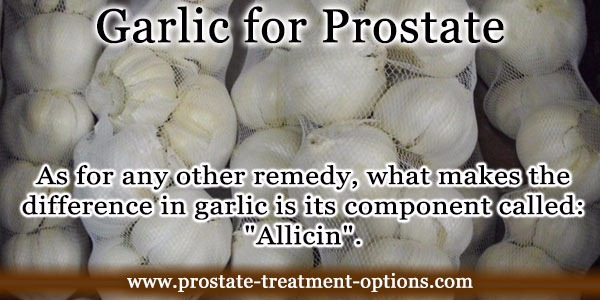
Garlic, or Allium sativum, has been eaten and used as a traditional remedy for centuries. When fresh garlic is chopped, crushed or chewed, chemical reactions produce several sulfur-containing compounds. The best known is allicin, although garlic contains many other biologically active substances as well.
These compounds are the main reason scientists have become interested in garlic’s possible effects on inflammation, oxidative stress, cardiovascular health and even some of the biological pathways involved in abnormal cell growth.
What Is Allicin?
Allicin is a sulfur-containing compound that forms when raw garlic is crushed or chopped.
It is responsible for much of garlic’s characteristic odor and has been studied for several biological effects.
However, allicin is unstable and changes into other sulfur compounds over time.
This means that:
- raw garlic;
- cooked garlic;
- aged garlic extract;
- garlic oil;
- and different supplements
do not necessarily contain the same compounds or doses.
Therefore, it is difficult to treat “garlic” as though every product has the same medicinal effect.
Does Garlic Help an Enlarged Prostate (BPH)?
There is no strong clinical evidence that garlic treats benign prostatic hyperplasia (BPH) .
Current European BPH/LUTS guidance recommends measures such as:
- appropriate fluid timing;
- moderating caffeine and alcohol when they worsen symptoms;
- double voiding;
- bladder training when appropriate;
- reviewing medicines that worsen urination;
- and treating constipation.
Garlic is not listed as an evidence-based treatment for BPH.
For men with bothersome symptoms, established BPH treatment options include watchful waiting, lifestyle measures, medications and, when needed, procedures or surgery.
Garlic Can Be Part of the Diet Without Being the Treatment
You do not have to avoid garlic because you have BPH. The important correction is simply not to promise that garlic itself will treat the enlarged prostate.
Can Garlic Shrink an Enlarged Prostate?
No reliable clinical evidence shows that it does.
This distinction is important because many natural-remedy pages use the words “improve prostate health” and “shrink the prostate” as though they mean the same thing.
They do not.
Treatments with established effects on prostate size include the 5-alpha-reductase inhibitors finasteride and dutasteride in appropriately selected men.
Some procedures physically remove, enucleate, vaporize or ablate obstructing prostate tissue.
Garlic has not demonstrated comparable effects.
You can see the difference in our guide to treatments that actually shrink an enlarged prostate .
Can Garlic Improve Weak Urine Flow or Frequent Urination?
There is not enough evidence to recommend garlic specifically for lower urinary tract symptoms.
Men with BPH may experience:
- weak urine flow;
- hesitancy;
- straining;
- frequency;
- urgency;
- nighttime urination;
- or incomplete emptying.
These symptoms are not caused solely by diet, and they are not always caused by BPH.
Our enlarged prostate symptoms guide explains why similar symptoms can also occur with bladder dysfunction, infection, strictures and other conditions.
Do Not Delay Evaluation Because You Are Trying Garlic
Persistent or worsening urinary symptoms should be assessed properly, especially when urine flow is becoming weaker or the bladder does not seem to empty.
Does Garlic Prevent Prostate Cancer?
There is no convincing clinical evidence that garlic prevents prostate cancer.
Some observational studies have investigated dietary patterns and allium vegetables, including garlic and onions.
However, observational associations are not sufficient to prove that garlic itself prevents cancer.
The National Cancer Institute currently states that it is not known whether dietary changes such as increasing fruits and vegetables reduce the risk of prostate cancer or death from prostate cancer.
If you are concerned because of a rising PSA level , changing your garlic intake should not replace appropriate medical assessment.
Can Garlic Lower PSA?
Garlic has not been established as a reliable way to lower PSA.
PSA can change because of several factors, including:
- BPH;
- prostatitis or inflammation;
- urinary retention;
- recent prostate procedures;
- prostate cancer;
- and medications such as finasteride or dutasteride.
If PSA is unexpectedly elevated, the appropriate response is to interpret it in context, sometimes repeat it, and decide whether further prostate testing is appropriate.
It should not be managed by trying to lower the number with garlic or another food.
Are Garlic Supplements Better Than Eating Garlic?
There is no evidence that garlic supplements are superior for prostate health.
Supplements can contain very different forms and concentrations of garlic compounds.
They should therefore not be assumed to provide:
- a stronger BPH effect;
- prostate shrinkage;
- PSA reduction;
- or prostate-cancer prevention.
This is the same principle I use when discussing natural remedies and supplements for enlarged prostate : the question is not whether a product is “natural,” but whether good human clinical evidence shows meaningful benefit.
What Diet Is Better Supported for General Prostate and Men’s Health?
Rather than focusing on one “prostate superfood,” I recommend thinking about the overall dietary pattern.
A balanced diet can include:
- a variety of vegetables;
- whole fruits;
- beans and legumes;
- whole grains;
- nuts and seeds;
- fish and other appropriate protein sources;
- and garlic as a flavoring or food ingredient if you enjoy it.
Maintaining a healthy weight, staying physically active and controlling metabolic conditions are more defensible health recommendations than relying on one particular food.
For men with mild urinary symptoms, current EAU guidance supports lifestyle and self-care measures as part of conservative BPH management .
Can Too Much Garlic Be Harmful?
Normal amounts of garlic used in food are generally well tolerated by most people.
Larger amounts or concentrated supplements may cause:
- bad breath and body odor;
- heartburn;
- abdominal discomfort;
- nausea;
- or other gastrointestinal symptoms.
Concentrated garlic products may also have antiplatelet effects and can be relevant for people taking anticoagulant or antiplatelet medicines.
Tell Your Doctor About Garlic Supplements Before Surgery
If you take concentrated garlic supplements and are scheduled for a prostate biopsy, TURP, HoLEP or another procedure, tell the treating team. Do not stop prescribed blood-thinning medicine on your own.
Does Garlic’s Antibacterial Activity Mean It Can Treat Prostatitis?
No.
This is another important distinction between laboratory research and clinical treatment.
If acute bacterial prostatitis is present, treatment requires proper medical assessment and appropriate antimicrobial therapy.
Garlic should not replace antibiotics when bacterial infection has been diagnosed.
Persistent pelvic pain is also not always an infection. Chronic pelvic pain can involve pelvic-floor dysfunction and other mechanisms, which is why one dietary remedy cannot be expected to treat every condition called “prostatitis.”
Dr. Albana’s Perspective
Garlic is a healthy and useful food, and I am comfortable recommending it as part of a varied diet if a patient enjoys it.
What I would no longer do is tell a man to “try everything” because it might relieve prostate symptoms or prevent cancer.
Garlic contains interesting sulfur compounds, including compounds related to allicin, and laboratory research has identified several biological effects.
But we do not have good clinical evidence showing that garlic shrinks an enlarged prostate, relieves bladder obstruction, lowers PSA or prevents prostate cancer.
If you have BPH symptoms, I would rather first establish how severe they are and whether there is significant obstruction. Depending on the findings, appropriate enlarged prostate treatment may range from simple lifestyle measures to medication or a urological procedure.
So my practical advice is simple: enjoy garlic as food if you like it, but do not depend on it as prostate medicine.
— Dr. Albana Greca, MD, MMedSc, Family Physician / General Practitioner
Most Asked Questions About Garlic and the Prostate
Is garlic good for the prostate?
Garlic can be part of a healthy diet, but it has not been proven to treat BPH or prevent prostate cancer.
Can garlic shrink an enlarged prostate?
No reliable clinical evidence shows that garlic reduces prostate volume. Medicines such as finasteride and dutasteride have established prostate-size effects in appropriately selected men.
Can garlic improve urine flow?
Garlic is not an established treatment for weak urine flow caused by BPH or bladder-outlet obstruction.
Does garlic prevent prostate cancer?
No. Current evidence does not prove that garlic prevents prostate cancer.
Can garlic lower PSA?
Garlic has not been proven to reliably lower PSA. An abnormal PSA should be interpreted in the context of prostate size, inflammation, medication use, examination and cancer risk.
Is raw garlic better than cooked garlic for the prostate?
There is no clinical evidence showing that raw garlic is a more effective prostate treatment than cooked garlic.
Are garlic supplements useful for BPH?
Garlic supplements are not established BPH treatments. Product composition varies, and concentrated preparations can also interact with medicines.
Can garlic replace antibiotics for prostatitis?
No. Bacterial prostatitis requires appropriate medical assessment and antimicrobial treatment when indicated.
Related Enlarged Prostate & Diet Guides
Medical References
-
European Association of Urology.
EAU Guidelines on the Management of Non-neurogenic Male Lower
Urinary Tract Symptoms — Disease Management.
2026.
EAU Male LUTS Guideline -
National Cancer Institute.
Prostate Cancer Prevention (PDQ®).
National Cancer Institute -
National Center for Complementary and Integrative Health.
Garlic.
NCCIH -
National Center for Complementary and Integrative Health.
Benign Prostatic Hyperplasia and Complementary and Integrative
Approaches.
NCCIH BPH Evidence Review
Medical information notice: Garlic is a food and should not be used as a substitute for appropriate evaluation or treatment of BPH, prostatitis, abnormal PSA results or prostate cancer. Concentrated garlic supplements can interact with medicines and should be discussed with a healthcare professional when relevant.
Written & medically reviewed by Dr. Albana Greca, MD, MMedSc • Family Physician / General Practitioner • Last medically reviewed: August 2026